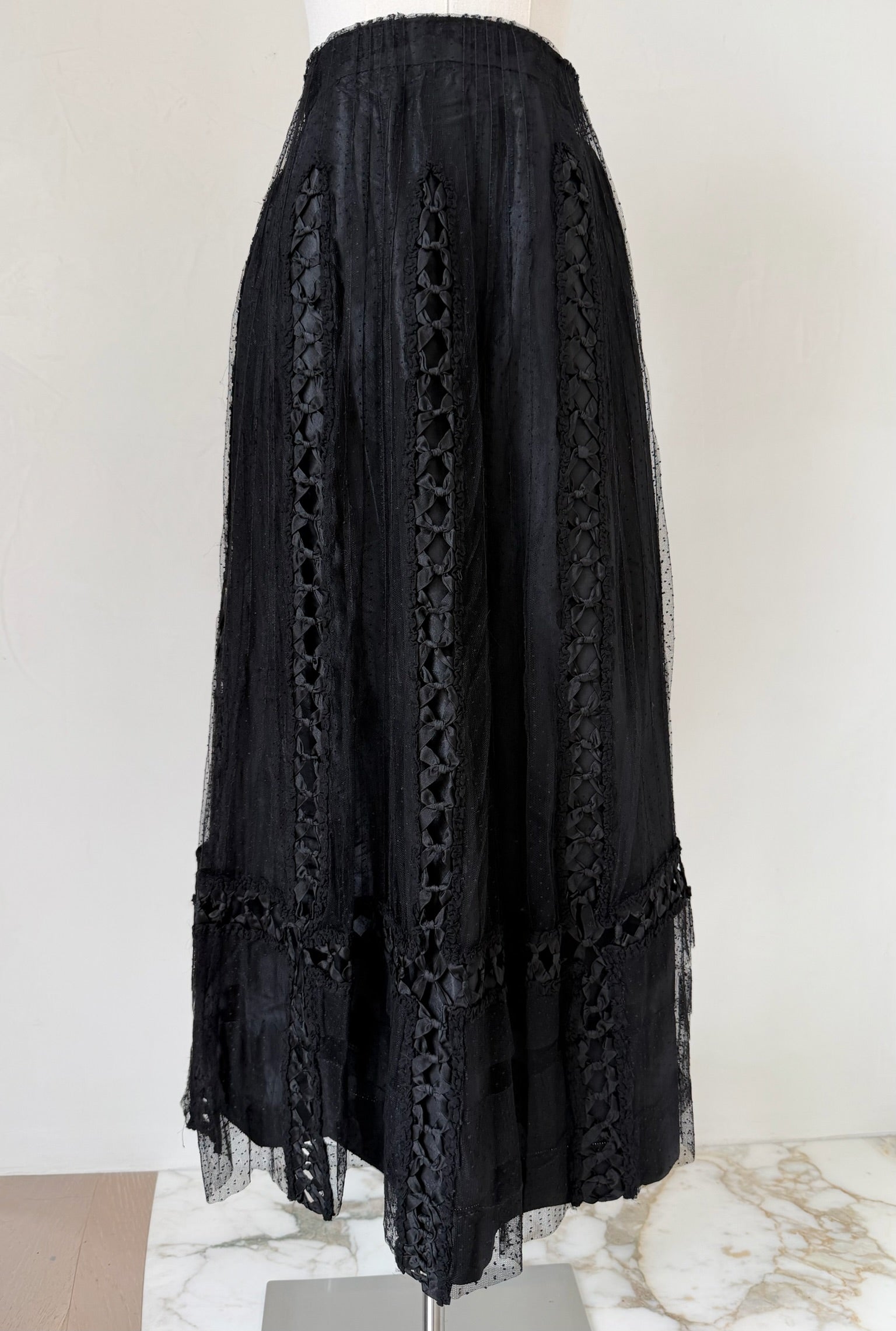
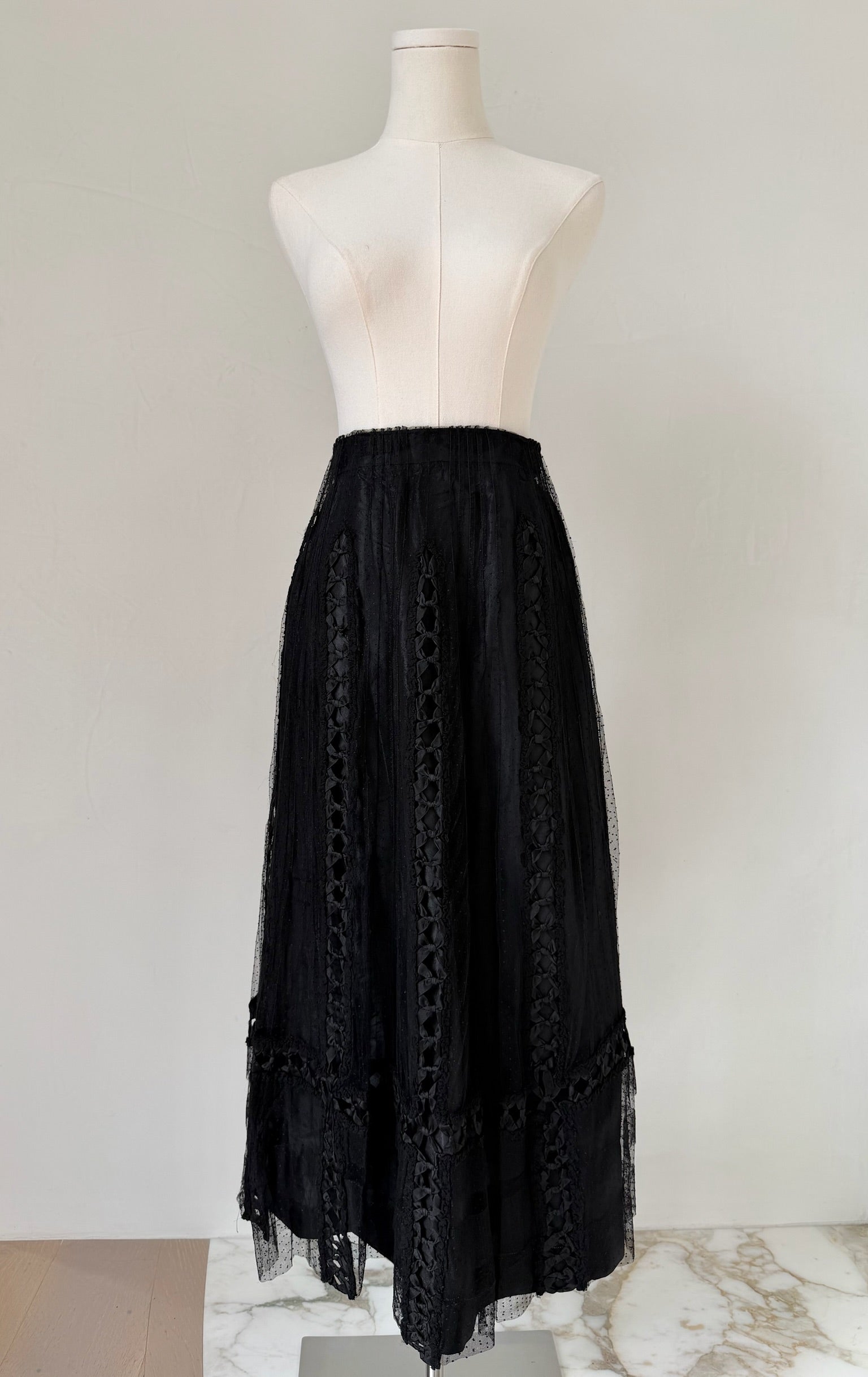
This sophisticated skirt dates to circa 1908–1912, placing it squarely within the Edwardian era, a period defined by fluid lines, soft volume, and an emphasis on surface texture rather than rigid structure. The silhouette reflects the era’s transition away from heavy Victorian tailoring toward lighter, more graceful movement.
Constructed from black satin and layered Swiss dot tulle, the skirt achieves depth and contrast through its interplay of opaque and sheer textiles. Vertical ribbon-trimmed panels and subtle black bow accents provide gentle ornamentation while maintaining an overall restrained elegance—typical of Edwardian formalwear intended for evening occasions, receptions, or society gatherings.
The waistband appears softly structured, allowing the skirt to drape naturally over the hips before falling into a fluid, ankle-length hem. The use of Swiss dot tulle—favored during this period for its delicacy and visual interest—suggests a garment made for a fashionable wearer attuned to contemporary textile trends.
Unlabeled and likely custom-made or produced by an independent dressmaker, this piece exemplifies the craftsmanship and material sensitivity of early 20th-century women’s dress. Surviving skirts of this quality are increasingly scarce due to the fragility of silk satin and fine netting, making this a noteworthy and collectible example of Edwardian fashion history.