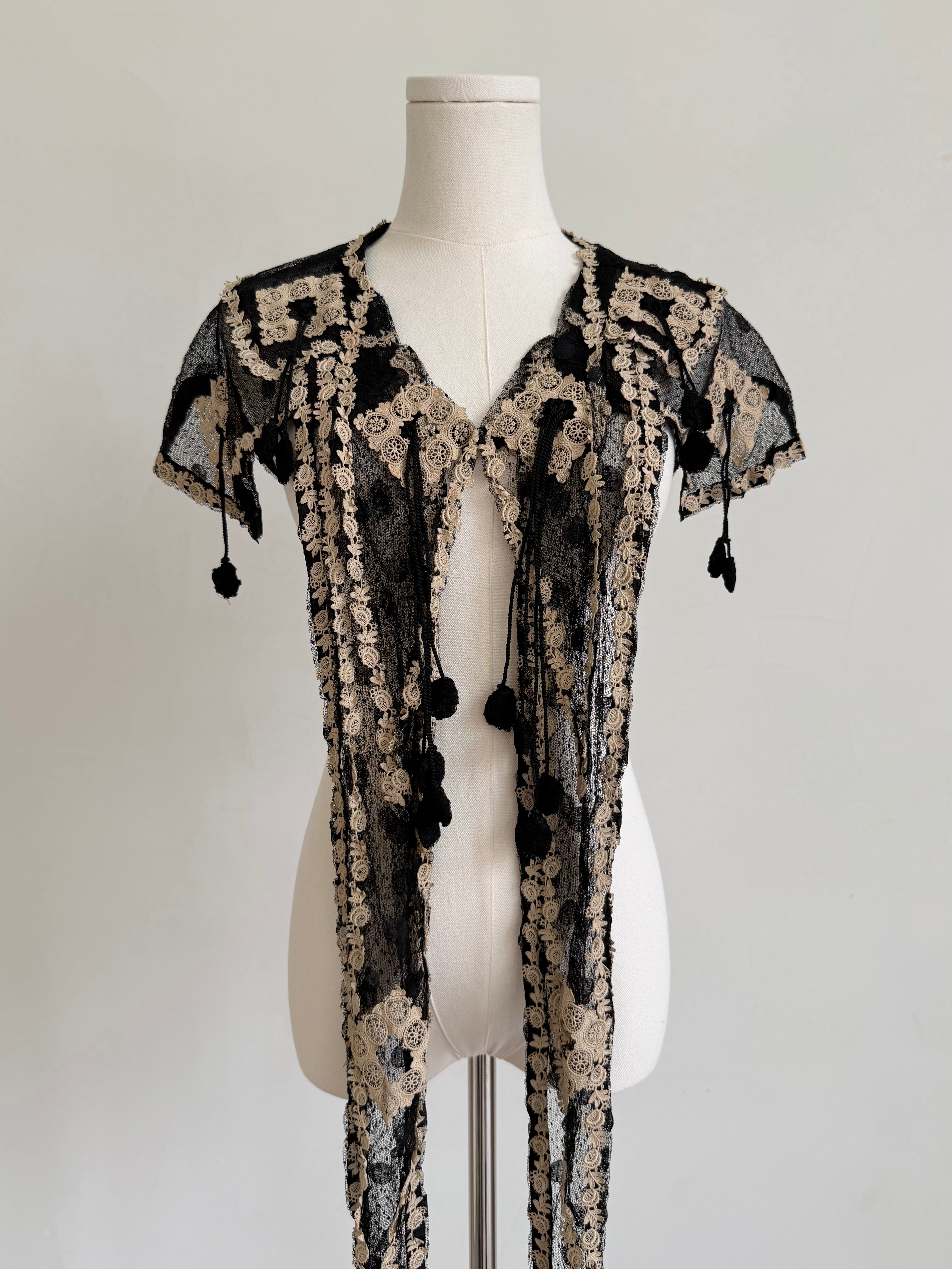
This elegant textile accessory dates to circa 1895–1905, a transitional period when women’s fashion emphasized layered softness, decorative surface detail, and fluid drapery. Based on its scale, construction, and openwork design, this piece is best categorized as a lace stole or fichu-style shoulder adornment, rather than a full shawl.
Crafted from black lace net, the stole is ornamented with beige floral lace appliqué, arranged in scrolling vertical motifs that provide contrast and visual rhythm. The appliqué work appears hand-applied, consistent with fine accessories of the era, and is further accented by black tassel trim, adding movement and subtle drama when worn.
The abbreviated width and elongated drop suggest it was intended to drape over the shoulders or frame the neckline of a high-collared bodice, evening gown, or tea dress. Pieces of this nature were often worn indoors for formal gatherings, serving both decorative and modesty functions without obscuring the underlying garment.
Unlabeled and likely handmade or produced by a specialist lace workshop, this stole exemplifies the Edwardian fascination with textural contrast—light against dark, sheer against solid—and the era’s preference for accessories that enhanced, rather than overwhelmed, the ensemble.
Surviving lace accessories from this period are increasingly rare, particularly those retaining intact appliqué and tassel elements, due to the inherent fragility of early net lace.